In many communities, education and workforce development operate alongside one another. Schools prepare students academically. Employers plan for workforce needs. The connection between the two often depends on individual relationships or isolated programs.
In Madison City, Alabama, that connection has been intentionally designed.
Through collaboration between Madison City Schools and Mazda Toyota Manufacturing (MTM), the community has built a connected talent pipeline that links Career Assessments, CTE pathways, Work-Based Learning, Talent Development, and Hiring Strategies into a coordinated system. Student interests inform opportunity. Opportunity reinforces academic planning. Planning supports long-term workforce readiness.
This is Career and College Readiness in action, where classrooms and companies share visibility into student potential and regional workforce opportunities to bridge the talent pipeline gap.
Workforce alignment begins with awareness and timing.
When Mazda Toyota Manufacturing scaled its Huntsville facility, leadership initially focused recruitment efforts on graduating seniors. Over time, the company recognized that students’ perceptions of career possibilities were shaped much earlier.
“If we’re waiting until they’re seniors to talk to them about career opportunities, we’ve waited too late.”
— Rylee Anderson, Education & Community Partnerships Specialist, Mazda Toyota Manufacturing
Madison City Schools addresses this through consistent use of the Alabama Career Planning System, powered by Kuder. Research-based career assessments are embedded into middle and high school programming, giving students structured insight into their interests, aptitudes, and potential pathways.
At the center of this work are dedicated career coaches at Madison City Schools, including Jodi Jones, Michelle Hyams, and Sara Baragona.
For Jodi Jones, the motivation to get students into career-connected experiences is personal.
Before transitioning into education, Jones worked as an engineer. She understands firsthand the rigor and opportunities in technical fields, as well as the misconceptions students often carry about them. Her move into career coaching was driven by a desire to help students see themselves in careers that are both attainable and impactful.
Reflecting on her own journey, Jones shared that she did not always feel supported in her early career goals. The experience shaped how she approaches her work with students today.
“I didn’t have someone walking me through my career goals or helping me connect what I was good at to real opportunities. That’s why this is so important to me. I want every student to feel supported and to see what’s possible for them.”
Jones frequently speaks about how much she values the Alabama Career Planning System in making that support tangible.
“I use Kuder every single day as a career coach. It makes our job easier. I love working with Elizabeth, and I truly believe in these resources because they help us guide students in a real, structured way.”
For Jones, the assessments are more than tools. They are a way to ensure students receive the kind of clarity and encouragement she believes every young person deserves.
When MTM offered to host approximately 50 eighth-grade girls for an immersive manufacturing experience called All Girls Auto Know, Jones reviewed students’ Kuder Career Interest Assessment results, analyzing the data to identify those whose top interests aligned with manufacturing, engineering, and STEM pathways. Jones invited every girl who had one of those in their top three interests.
For Jones, the intentional selection process was critical. As a former engineer, she understands how powerful early exposure can be, particularly for young women exploring technical careers. She made sure students understood why they were invited and how their interests connected to the opportunity. Jones also went a step further to send home information to their caregivers about the opportunity and why their student was selected to participate. She heard great feedback from caregivers thankful for the opportunity.
The response was immediate. Some students even requested flexibility around other commitments so they could attend.
Jones is quick to note that the event’s success was not hers alone.
She attributes much of the impact to a collaborative environment across the district: teachers, administrators, and counselors who support career exploration and allow students the flexibility to participate in meaningful opportunities.
When conflicts arose, such as extracurricular obligations, educators worked together to provide alternate assignments so students did not have to choose between academic responsibilities and career exploration.
That district-wide support reinforced a powerful message: career readiness is a shared priority.
From MTM’s perspective, that intentionality and collaboration strengthened the experience.
“We wanted to be very strategic about who was going to come… Jodi and her team use their career interest assessments to pick girls who either showed an aptitude or an interest in things like science, engineering, math, and manufacturing.”
Rylee Anderson, Education & Community Partnerships Specialist, MTM
Career assessments became a connective infrastructure, linking student insight to employer opportunity, supported by a district culture that prioritizes participation.
Madison City Schools ensures that assessment results translate into actionable direction.
After students complete career assessments, career coaches and counselors help them connect their interest areas directly to the district’s CTE academies and pathways. Students can see how interest areas such as advanced manufacturing, engineering, automotive technology, or marketing align with specific coursework offered within the district.
During structured four-year planning sessions, students review:
This creates a visible progression:
Assessment → CTE Pathways → Four-Year Education Plans → Work-Based Learning → Employment
For students, that clarity strengthens confidence. For employers, it increases alignment between classroom preparation and regional workforce needs.
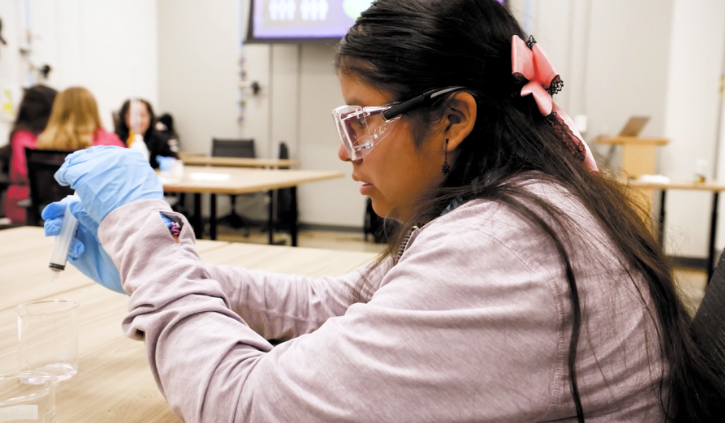
When students arrived at MTM’s facility, the experience reflected modern manufacturing environments. They assembled 3D-printed vehicle components in a simulated production line, interacted with engineers, and observed robotics and automation systems in action.
The experience helped students connect classroom learning to real-world application.
“Some of the students reflected, ‘I remember doing this in science. I didn’t know that I could do this for a job.’” Others began considering future coursework more intentionally.
Jones recalled one student who shared, “I think I might take an engineering class next year at the high school,” after engaging at the event.
For Anderson and the MTM team, hosting students whose interests were already aligned increased the depth of interaction.
“The assessments were a really great way to get a good group of girls who were engaged. They already kind of had an interest… we were able to nourish that.”
Rylee Anderson, Education & Community Partnerships Specialist, MTM
Work-Based Learning delivered value because it was grounded in student interest data and reinforced by district pathways.
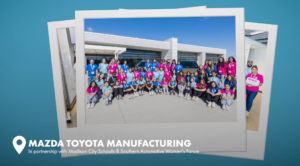
MTM’s engagement now spans multiple stages of a student’s academic journey:
The company maintains a workforce with an average employee age of approximately 29, reflecting sustained engagement with early-career talent.
One student that Anderson met as a ninth grader now articulates her goal clearly:
“I’m working for MTM one day.”
Anderson explained, “It’s not something you see immediate reward from… It’s a long-term game. We have to plant that seed and nurture it over time.”
That long-term perspective mirrors Madison City Schools’ commitment to sustained career development and pathway alignment.
Employer engagement is most effective when built on trust and shared intent.
Anderson shared that “Starting with the career coaches and building those relationships, that’s how we’ve gotten a lot of access to the students.”
Jones reinforces that intentional placement strengthens those relationships. Jones shared that she’s learned,
“Employers are a lot more likely to say yes if I say I’m going to intentionally pick students that I know are interested in your industry.”
Career assessment data supports this credibility. Employers engage aligned students while students encounter relevant opportunities, creating a more coordinated talent pipeline over time.
Career and College Readiness is most effective when woven into daily practice and reinforced through partnership.
In Madison City:
Madison City Schools demonstrates how career assessments, CTE pathways, work-based learning, talent development, and hiring strategies can operate as interconnected components of a broader community strategy.
From classrooms to careers, the pipeline is connected.
And that coordination is what defines a CCR Champion.
Request information about how you can partner to support talent development and work-based learning here.
These solutions were made available through the Alabama Career Planning System, a tailored CCR solution built by Kuder and provided by the Alabama State Department of Education.
Table of Contents
